The Stove Store: Professional Gas Fireplace Sales and Installation in Dover, DE
At The Stove Store, we understand that a fireplace is the heart of a Delaware home. Whether you are looking to upgrade an outdated wood burner or install a brand new focal point in your living room, our team is dedicated to providing the highest quality gas fireplace sales and installation services. We pride ourselves on helping Dover residents find the perfect heating solution that combines modern convenience with the classic ambiance of a real flame. Our goal is to ensure your new system operates as efficiently as possible while providing a reliable heat source that your family can enjoy for years to come.
Why Should You Consider Switching to a Gas Fireplace?
Many homeowners in our area are making the transition from wood to gas because of the sheer convenience and consistency it offers. If you find yourself tired of hauling logs, dealing with messy ash, or struggling to get a fire started on a damp Tuesday night, a gas fireplace might be the perfect solution for your home.
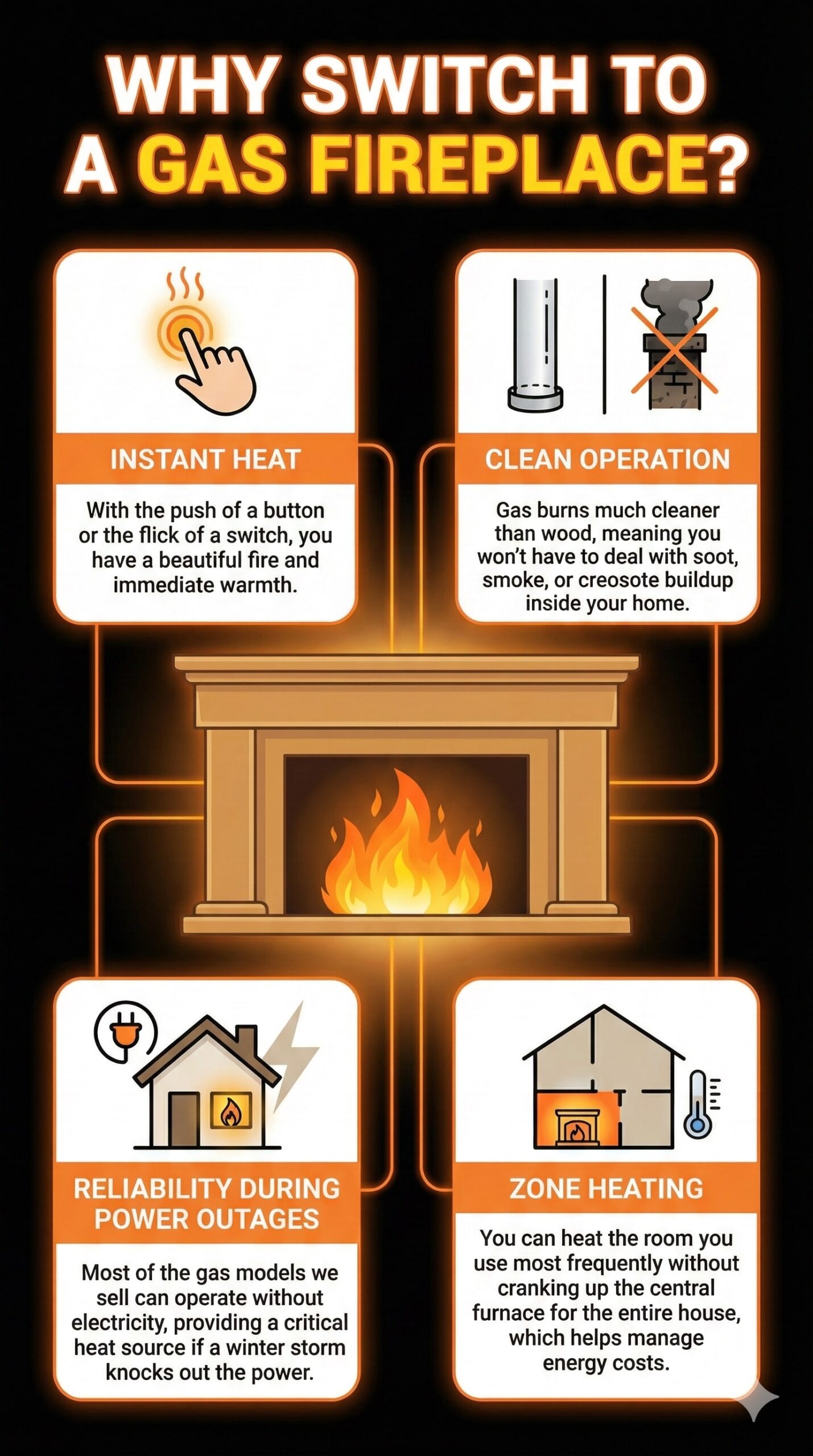
- Instant Heat: With the push of a button or the flick of a switch, you have a beautiful fire and immediate warmth.
- Clean Operation: Gas burns much cleaner than wood, meaning you won’t have to deal with soot, smoke, or creosote buildup inside your home.
- Reliability During Power Outages: Most of the gas models we sell can operate without electricity, providing a critical heat source if a winter storm knocks out the power.
- Zone Heating: You can heat the room you use most frequently without cranking up the central furnace for the entire house, which helps manage energy costs.
Your Trusted Dover, DE Fireplace Experts: A Community We Love
Dover is more than just the capital of Delaware; it is a city rich in history and community spirit. As a local business, we are proud to serve the homeowners who live near the historic Dover Green, where the U.S. Constitution was first ratified. We love the unique blend of old-world charm found in the Victorian homes of the historic district and the bustling energy around the Dover Motor Speedway.
When we aren’t out installing the latest gas inserts, you might find our team enjoying a walk through the First State Heritage Park or taking in the impressive displays at the Air Mobility Command Museum. We appreciate the natural beauty of Silver Lake Park and the quiet preserves at Bombay Hook National Wildlife Refuge. Because we live and work here, we understand the specific needs of Dover homes, from the architectural challenges of older masonry to the modern requirements of new builds in growing neighborhoods like Clearview Meadow.
Are Old Unlined Chimneys More Prone to Hidden Interior Decay Even When the Exterior Bricks Look Strong?
When we visit older homes in Dover for a gas fireplace consultation, one of the most common things we check is the condition of the existing chimney. It is a common misconception that if the exterior bricks look sturdy, the interior must be in good shape. In reality, old chimneys that lack a proper liner are significantly more prone to hidden interior decay. Over many decades, the acidic byproducts of combustion from old wood or coal fires eat away at the mortar joints between the bricks inside the flue. This creates small gaps and cracks that you can’t see from the ground or even from the roof without specialized camera equipment.
At our company, we emphasize that a gas fireplace installation is the perfect time to address these structural vulnerabilities. When we install a gas insert into an unlined or deteriorating masonry chimney, we almost always install a new, high quality stainless steel venting system. This creates a continuous, sealed path for exhaust to exit your home, which makes the entire system much safer than relying on old, crumbly masonry. Without this, moisture from the gas exhaust (which is naturally high in water vapor) can soak into the old bricks and mortar, leading to a process called “spalling” where the brick faces begin to flake off and fall into the flue.
- Internal Gaps: Missing mortar between bricks can allow heat or gases to transfer to the wooden framework of your house.
- Moisture Damage: Gas exhaust produces significant condensation; an unlined chimney will absorb this moisture, leading to structural rot.
- Draft Issues: A flue that is too large or crumbling internally will not draft as efficiently as possible, potentially causing the fireplace to shut down frequently.
By choosing a professional installation from The Stove Store, you are ensuring that these hidden dangers are mitigated. We don’t just “plug in” a fireplace; we evaluate the entire venting structure to ensure it is prepared for the specific demands of gas combustion.
Does Humidity and Heavy Rain Affect a Gas Fireplace and What Happens if the Flue Is Damp?
Delaware weather can be quite unpredictable, with high humidity in the summer and heavy rain throughout the year. Many of our customers ask what happens if they light a fire when the flue is still damp after a coastal storm. While gas fireplaces are generally very resilient, moisture is still an element we have to manage carefully. If the interior of your venting system is damp, the initial startup of the fire might be slightly sluggish. As the burner ignites, the heat must first evaporate any standing moisture or high-humidity air inside the flue before a strong upward draft can be established.
If you light a fire in a cold, damp flue, you might notice a small amount of condensation forming on the interior glass for the first few minutes. This is a normal physical reaction where the hot exhaust hits the cold, wet glass. However, if your chimney or venting system is not properly capped, excessive rain can enter the system and cause more serious issues. Water sitting in the bottom of a gas unit can damage the pilot assembly, rust the burner tubes, or even cause the electronic control module to fail. This is why we always inspect the chimney cap and flashing during our installation process. We want to ensure that your investment is protected from the elements.
- Pilot Light Issues: Excessive moisture can make it difficult for the pilot light to stay lit or for the main burner to catch.
- Component Corrosion: Metal parts like the firebox floor and the burner are susceptible to rust if water is allowed to pool.
- Structural Weathering: In colder months, moisture trapped in the masonry can freeze and expand, which accelerates the deterioration of the chimney structure.
To combat these issues, we often recommend waterproofing services for the exterior masonry and ensure that a high quality, professional-grade chimney cap is in place. This keeps the flue as dry as possible, allowing your fireplace to start up quickly and run as efficiently as possible, regardless of the weather outside.
Can a Gas Fireplace’s Draft Be Affected by Nearby Construction or Home Additions Years After Installation?
One of the most surprising things homeowners learn is that the world around their chimney can change how it performs. We have seen cases where a gas fireplace that has worked perfectly for five years suddenly starts having drafting issues or shutting itself off. Often, this is caused by “building interference.” If a neighbor builds a tall addition, or if you add a new level to your own home, it can change the way wind flows over your roof. This can create high-pressure zones that literally “push” air down your chimney, fighting against the hot exhaust trying to escape.
Even something as simple as a tree growing taller over a decade can have an impact. In Dover’s more established neighborhoods, large oaks and maples often overhang rooftops. If a large branch grows directly over the chimney top, it can disrupt the natural draft or trap pockets of cool air that make it harder for the fireplace to vent. Furthermore, modern home improvements like new, airtight windows or high-powered kitchen exhaust fans can create “negative pressure” inside the house. Because a gas fireplace needs air for combustion (unless it is a direct-vent model), it might struggle to find enough air to stay lit if the house is too tightly sealed.
- Pressure Changes: New structures can create wind eddies that interfere with the exit of exhaust gases.
- Negative Pressure: Powerful HVAC systems or new insulation can “starve” the fire of the oxygen it needs.
- Obstructions: Overhanging trees or nearby tall buildings can create downdrafts that lead to frequent “nuisance” shutdowns of the fireplace.
When we perform an installation, we take these environmental factors into account. If we suspect your home might be prone to these issues, we might recommend a “direct-vent” system. These units use a sealed pipe-within-a-pipe design that pulls all its combustion air from outside and sends all exhaust back outside, making it completely independent of the air pressure inside your home. This ensures your fireplace remains safer and more reliable, even if the neighborhood changes around you.
Do Gas Fireplaces Need Annual Inspections and What Are the Early Warning Signs of a Problem?
There is a common myth that gas fireplaces are “maintenance-free.” While they are certainly lower maintenance than wood-burning units, they are still fuel-burning appliances that require regular check-ups. At The Stove Store, we recommend an annual inspection to ensure every component is functioning as efficiently as possible. Over a year of use, dust, pet hair, and spider webs can accumulate in the burner ports or the pilot assembly. This can lead to an uneven flame or a pilot light that frequently goes out.
It is also important to look for early warning signs that your system might need professional attention. If you notice a “filming” or white cloudy residue on the inside of the glass that doesn’t wipe away easily, it could be a sign that the gas is not burning cleanly or that there is a venting issue. If you smell a faint “rotten egg” odor, that is a sign of a gas leak and you should shut the system off immediately and call us. Other signs include a delayed ignition (a “boom” or loud pop when the fire starts), soot building up on the ceramic logs, or the unit shutting itself off after only a few minutes of operation.
- Glass Discoloration: White or dark stains can indicate improper combustion or sulfur buildup.
- Soot on Logs: Unlike wood fires, gas flames should not produce heavy soot; if they do, the air-to-fuel ratio is likely off.
- Operational Delays: If the fire takes more than a few seconds to ignite after you turn it on, the burner ports may be clogged.
- Odd Noises: Whistling or roaring sounds can indicate a failing blower motor or a problem with the gas pressure regulator.
Skipping an annual inspection might seem like a way to save money, but it often leads to more expensive repairs down the road. Our technicians use specialized tools to check for carbon monoxide leaks and ensure that all safety sensors are active. This proactive approach keeps your home safer and ensures your fireplace is ready for those cold Delaware nights.
How Does Professional Installation Ensure Your System Operates as Efficiently as Possible?
The efficiency of a gas fireplace isn’t just about the model you buy; it’s about how it is installed. A fireplace that is poorly sized for a room or incorrectly vented will waste fuel and provide inadequate heat. When you work with us, we begin by calculating the square footage and the “heat loss” of your room to recommend a unit with the appropriate BTU (British Thermal Unit) output. If a unit is too powerful, it will heat the room too quickly and shut off, never allowing the masonry or furniture to truly warm up. If it is too weak, it will run constantly and drive up your gas bill.
Professional installation also involves precisely tuning the “air shutter.” This is a small adjustment on the burner that controls the mix of oxygen and gas. If there is too much air, the flame will look blue and clinical; if there is too much gas, the flame will be a lazy orange and produce soot. We tune each unit to provide a realistic, dancing yellow flame while maintaining a clean burn. Additionally, we ensure that the “clearances to combustibles” are strictly followed. This means making sure your wooden mantel, flooring, and wall studs are far enough away from the heat to prevent any long-term heat damage or fire risks.
- Precision Tuning: Adjusting the fuel-to-air ratio for the perfect balance of aesthetics and efficiency.
- Proper Venting Routes: Ensuring the vent pipe has the correct “rise” and “run” to facilitate a natural, strong draft.
- Sealing the Envelope: Using professional-grade high-temperature silicone and fire-stop spacers to ensure no heat escapes into your wall cavities.
- Blower Calibration: If your unit has a fan, we make sure it is positioned to circulate warm air into the room as efficiently as possible.
By choosing The Stove Store for your sales and installation, you aren’t just buying a product; you are investing in a system that has been calibrated specifically for your home’s layout. We take the time to do it right because we know that a job well done means a warmer, happier home for our neighbors in Dover.
Contact The Stove Store for Your Dover Gas Fireplace Needs
Are you ready to transform your home with a beautiful, high-efficiency gas fireplace? Whether you are in the middle of a home renovation or simply want to upgrade your current hearth, our team at The Stove Store is here to guide you through every step of the process. From selecting the perfect style in our showroom to the final safety check on installation day, we are committed to your total satisfaction.
Contact us today to schedule your consultation and let us help you make your Dover home safer and more comfortable than ever before.
Monday - Friday: 9am to 4pm
Saturday: 9am to 2pm
Sunday: Closed
We Accept Credit Cards